Main dishes
Pierogi with Meat Without Folding
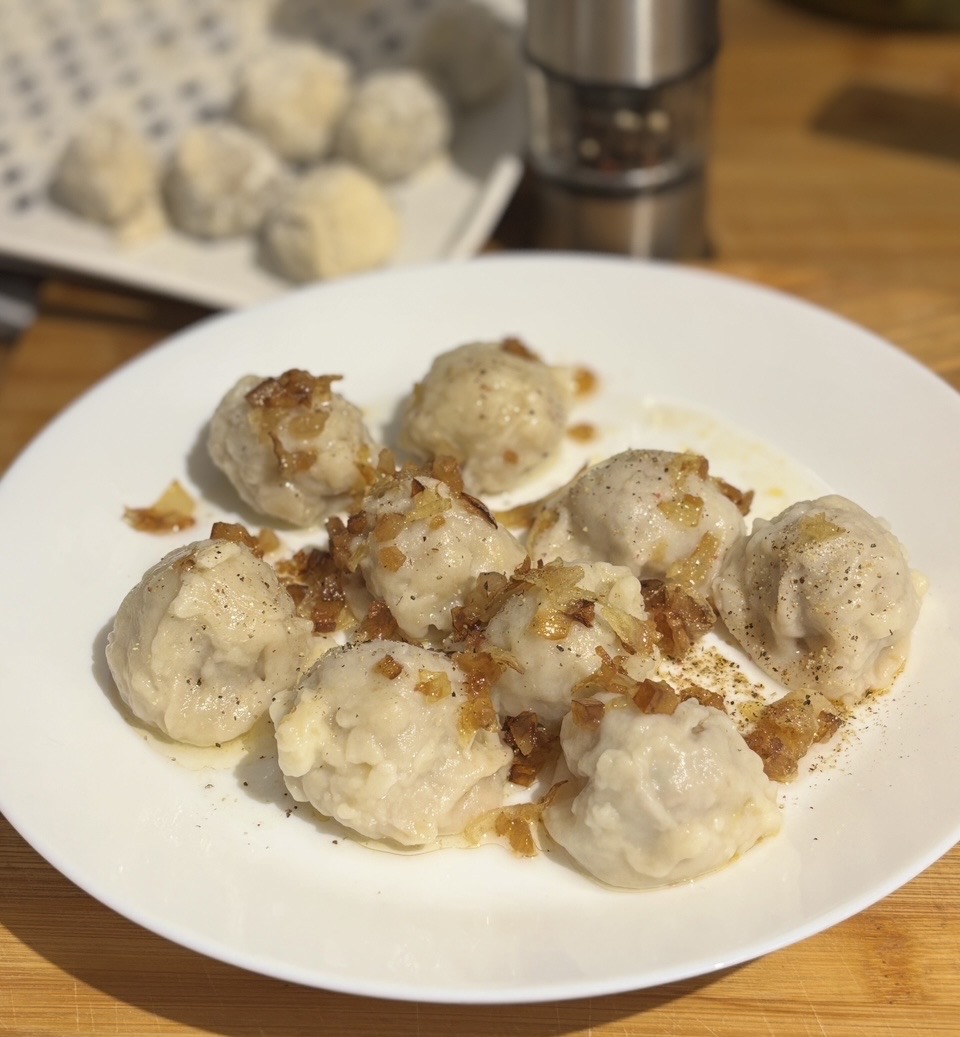
Pierogi without folding is an internet trick for quick “almost pierogi.” I’ll say it right away—this won’t replace real Polish pierogi, but the idea is fun. We make meat balls, roll them a few times in flour and cold water until a thin layer of dough forms. Then we cook them like pierogi. Tasty and simple, though with a larger batch they’re not as quick as it seems.
Method
1
INTRO
2
Pierogi without folding is an internet trick for quick “almost pierogi.” I’ll say it right away—this won’t replace real Polish pierogi, but the idea is fun. We make meat balls, roll them a few times in flour and cold water until a thin layer of dough forms. Then we cook them like pierogi. Tasty and simple, though with a larger batch they’re not as quick as it seems.
3
Chop the onion finely and sauté it in a little oil until softened.
4
Press the garlic through a press or chop it finely.
5
Put the ground meat, onion, garlic, parsley leaves, egg, salt, pepper, and paprika into a bowl.
6
Mix everything thoroughly by hand or with a spoon until the mixture is uniform.
7
Lightly grease your hands with oil and form small meat balls.
8
In one bowl add the flour, and in the other pour in the cold water.
9
Coat each ball in flour, dip it briefly in cold water, and then coat it in flour again.
10
Repeat the coating and dipping 3–4 times until a thin layer of dough forms on the meat.
11
Bring salted water to a boil in a large pot.
12
Add the balls to the boiling water in batches and cook for about 5 minutes after they float to the surface.
13
Remove with a slotted spoon.
Tips
💡 Make small balls—they cook faster and resemble little pierogi better.
💡 Can be served with sautéed onion, butter, or sour cream.
💡 These are not classic pierogi—more of a quicker version for people who don’t want to roll and fold dough.
Warnings
⚠️ Don’t add all the balls at once, because they may stick together.
⚠️ The water for dipping should be cold—then the flour forms a dough layer better.